“Token” Opposition
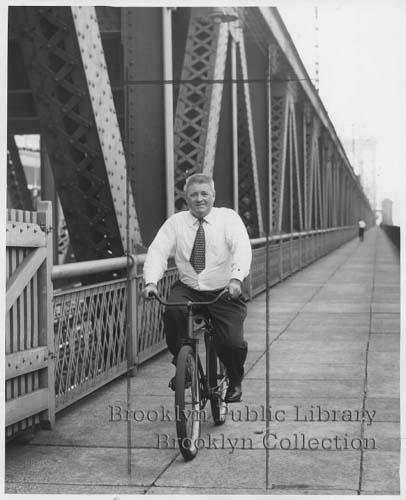
Apropos to the recent MTA fare hikes comes this photo via a member of Transportation Alternatives’ Brooklyn Committee and the BPL Photo Collection. Here’s the summary:
Token opposition–George Thomas, 45-year-old clerk of 205 Luquer St., demonstrates how to cope with increasesd transit fare. Thomas, employed by an insurance firm at 90 John St., Manhanttan, cycled over the Manhattan Bridge this morning.
Had today’s bike lanes–and Google Maps–existed in 1953, Thomas would have found his bike commute to be approximately 26 minutes, just slightly longer than taking the subway. Given the cost of commuting in 2011, perhaps we’ll soon see some photos captioned, “MetroCard Opposition.” Doesn’t have the same ring to it, does it?
Neighbors For Better Bike Lanes But Worse Math
Recapping some of the year’s big stories, something strange caught my eye in the recent NY1 piece naming Janette Sadik-Khan the NYer of the Year.
Here’s Norman Steisel and NBBL in their December 22, 2010 letter to the editor of the New York Times.
At Prospect Park West in Brooklyn, for instance, where a two-way bike lane was put in last summer, our eyewitness reports show collisions of one sort or another to be on pace to be triple the former annual rates.
Here’s Steisel in a January 1, 2011 story on NY1:
“Just five months since the bike lanes were opened, we’ve received eyewitness accounts of 10 vehicular accidents on Prospect Park West, which compares to an annual average rate of 8.8 for the preceding four years,” said bike lane opponent Norman Steisel.
There’s only one thing to point out here: 10 is not “triple” 8.8.
Being generous, the PPW bike lane “opened” in June 2010. So I’ll even give NBBL an extra month. There are two possible explanations for the discrepancy between Steisel’s two statements.
- While writing the first letter, NBBL and Steisel expected the remaining nine days of 2010 to be filled with an astonishing sixteen additional accidents of an unspecified type.
- NBBL and Steisel are lying.
Which explanation do you think is most likely?
UPDATE, 2:25 PM: It was pointed out to me that NBBL is extrapolating their five month-sample to the entirety of 2010, which I understand. Under nine accidents for an entire year versus 10 in just five months would, of course, be disturbing…if such stats were verifiable. Two big questions come up, even with this clarification. First, if the annual accident rate of 8.8 comes from DOT or NYPD stats, why is NBBL now relying on eyewitness accounts? Surely they could get their “after” data from the same place they got their “before” figures, no? Second, if the 8.8 figure comes from previous “eyewitness accounts,” why were they out collecting data years before the bike lane was installed, since most of them think that PPW was just fine without the bike lane? (Tom Vanderbilt has made a similar point.)
NBBL, if any of you are reading, please provide me with your methodology and I will gladly post your findings here, unedited.
I offer my apology for my shoddy analysis and slight misunderstanding of the data and my thanks to those whose tweets offered clarification.
Quick Hits
– Per @Naparstek’s suggestion, add the phrase “…except for bicycles” into most sentences of this New York Times article on increased transit costs and you’ve got a game that’s as fun as adding “…in bed” to fortune cookies. To wit: “Transportation, by wheel, foot or hoof, has become one of the fastest-growing costs of city life, and in 2010, no mode in New York City seemed immune…except for bicycles.“
– NY1 has named Janette Sadik-Khan their NYer of the Year. The piece on the DOT head includes the requisite quote from Norman Steisel:
“Just five months since the bike lanes were opened, we’ve received eyewitness accounts of 10 vehicular accidents on Prospect Park West, which compares to an annual average rate of 8.8 for the preceding four years,” said bike lane opponent Norman Steisel.
Give NY1 credit for calling a duck a duck. This is the first time that I can recall Steisel being correctly identified as a “bike lane opponent” rather than as someone who is in favor of better bike lanes, whatever that means. Steisel pulls out the old trick of citing unverifiable, anecdotal “eyewitness accounts” of PPW accidents, which, as Tom Vanderbilt notes, include no information on severity or type of crash. Tellingly, even though NBBL is happy to tell anyone who will listen that there was a previous average rate of 8.8 accidents they never saw the need to do something about it until the DOT, CB6, and others did it for them.
– Also in PPW news, the bike lane was still unplowed as of yesterday, although that may have changed. As Ben Fried at Streetsblog notes, “In the eyes of the opposition, NYC’s bikeways are damned if they get plowed, and damned if they don’t.” I guarantee you that at the next CB6 meeting, someone from NBBL will present the lovely Catch-22 that an unplowed, impassable bike lane that no one can use is proof that the bike lane is useless. If you build it, but then don’t plow it, they won’t come.
– City Council member David Greenfield rails against Bloomberg for clearing the Ocean Parkway malls before the roads. Two things might make his complaint true, but they both require you to live in an alternate New York universe. First, you have to ignore the fact that the Parks Department, not Sanitation, is responsible for the OP malls. (Unlike the PPW bike lane, which is under Sanitation’s purview yet remains snowed over.) The other inconvenient fact is that those “bike lanes” are actually shared sidewalks and bike ways with benches used by the a large number of the area’s elderly population. But other than that, Greenfield is correct. Remember when you watch the video and see Greenfield complain that the oil truck can’t get down the side street that this is the City Council member who wanted to add more parking spaces to city streets by reducing the space around fire hydrants.
Quote for the Day
Your job is to keep speaking reason while the madness runs its course. – Elly Blue, “The Year Ahead in Bikes,” Grist.org
Lots to agree with in Elly’s 2011 predictions. If I were to add a more specific prediction to her observation that “local media is poised to pounce on bikes,” it would be to say that livable streets advocates need to brace themselves for 2011, especially when the weather gets warmer. With what I think will be the biggest increase in cycling numbers since anyone started keeping track, and with lingering confusion over how to use bike lanes, it is all but inevitable a New York City cyclist will hit and injure a pedestrian this year. Whether it’s the fault of a salmoning cyclist or a distracted pedestrian on a cellphone will be irrelevant. So too will the fact that it will be statistical anomaly, at least according to the Safety in Numbers theory.
When it happens, expect the usual suspects from CBS2 and New York Post columnists to the Metro section of the New York Times, City Council members, and Marty Markowitz to use the story as a referendum on bike lanes. Never mind the six-car pile up just down the street; bike haters will be licking their chops to exploit any velo-related accident that comes over the wire. Someone could trip over a valve cap on a sidewalk and it would generate more media coverage–and outrage–than a school bus filled with nuns crashing on the West Side Highway.
Be prepared. I do believe that in the end cooler heads and common sense will prevail. With rising transit costs and higher gas prices already here or coming our way, how can they not?
Of Math and Personal Responsibility
I’m back from a week away, not only from blogging but also from New York. Thankfully, my family got out of New York one day before the big blizzard hit, avoiding an extended stay on an airport floor, and didn’t return until New Year’s Day. We spent the week in Park City, Utah, a place where snow is greeted with joy, not outrage.
Despite how lucky I felt to be in such a beautiful place, there was part of me that grew wistful as I watched the national news or read reports of snow-covered city streets online last week. I always love the city when it snows, and was a bit sad to miss out on the action this time around. I think that’s part of what it means to be a New Yorker: sometimes we can’t wait to get out, but are afraid of what we’ll miss when we do.
What I missed, from my point of view, was that quiet peacefulness that settles over the city with the first big snow. Cars and buses slow down, then disappear almost entirely from city streets. One of my favorite memories of living in Manhattan is walking on a snow-covered 2nd Avenue and seeing people on cross country skis heading up to Central Park. And this was at 24th Street. The rhythm of the city changes completely and the city that never sleeps somehow seems like it would rather stay in bed with some hot cocoa. While I’m not sure I’d always want the city to be like this, the calm that blankets the city with the snow is a powerful reminder that nature, not commerce, is the driving force of the world.
There’s often a great communal spirit that comes with bad winter weather, especially since the day and age in which we live which is otherwise so socially fractured. With mass media split into hundreds of TV channels and millions of websites, weather may be the only shared cultural experience left anymore.
If there’s one thing I noticed as I watched the storm and its after effects from outside the city, it’s that that communal spirit seemed to diminish or vanish completely the minute any discussion of driving came into the picture. And not driving as it relates to ambulances, fire trucks, plows, sanitation trucks or other vital services, but personal driving. Yes, there were subway and bus disruptions, including horror stories of people trapped on trains for hours, but few seemed to generate the media outrage of those poor, maligned drivers who could not get their cars on–or off–the road.
To be fair, many cities, states, and other municipalities had the foresight to declare snow emergencies long before New York did. While not rising to Katrina-level incompetence, Bloomberg missed a major opportunity to get out ahead of this storm. But if one considers the financial situation in which the city found itself as a new year was about to begin, the pre-storm handwringing begins to make sense. If it’s true that a blizzards costs the city $1 million per inch of snow, I can understand why the powers that be made a conservative bet on when to rev up the snowplows.
For me it boils down to two issues: math and personal responsibility.
First the math: you can not complain about tax increases, toll hikes, and higher meter rates and then stomp your feet when the city doesn’t have enough money to plow or maintain the streets as well as you think it should. The money most people lost by not being able to get to work for a few days is still probably greater than any sensible tax increase and even possibly greater than what most people would have been spending to drive had the city instituted congestion pricing or tolls on the Brooklyn and Manhattan bridges. Yet the next time tax increases come up for a vote, they will be voted down. And then it will snow again and we’ll repeat this whole process all over again. It’s the circle of life. This storm may not have had its “Get your government hands off my Medicare” moment, but it’s not hard to find the essence of that complaint in dozens of news editorials and in what must have been thousands of calls to 311.
And what about personal responsibility? If I park a car in a private garage for $300 per month, I think I’m entitled to complain if the garage owners tell me that due to snow I won’t be able to get my car for a week. After all, what is my $3,600 in annual costs paying for if not for the necessary maintenance to guarantee access to my private vehicle? But if I park my car for free on public property year round, I have less of a right to complain when inconvenienced for a few days. It’s simply the cost of getting an otherwise free perk. It’s one thing to get outraged if your point of view was that emergency vehicles could not get where they need to go, and that’s a sense of outrage I will gladly share. But why then was there so little outrage at the abandoned private vehicles that made it impossible for snow plows to do their job?
We can not expect the government to solve every problem, especially when we don’t want to pay the true cost of solving them. And that’s where math and personal responsibility need to come together. In the immediate sense, weather reports are as available to private citizens as they are to government leaders, and if getting somewhere is important I ought to think about making other arrangements or changing my plans if it looks like the city may be on the verge of shutting down. (I don’t want to dismiss people in situations where driving was of lifesaving importance, but I am happy to wager that the majority of people who abandoned their cars on public roads were not on their way to cure cancer or take an elderly person to the hospital.) In the long-term sense, I hope those who complained about being snowed in remember how much it cost them financially before they write an angry letter to the editor or call their city council member the next time someone proposes a tax increase. Do the math.
From the outside looking in, the entire media coverage of this blizzard-induced outrage reminded me why owning a car in this city is more trouble than it’s worth. Had I been here, I would have looked out of my window with wonder and thought about how much I love the city when it snows. Sure, it wouldn’t have taken long before I remembered how narrow and slushy sidewalks get or how that clean white blanket quickly turns into a soot-covered and garbage strewn mess, but at least I would have had a few moments of joy at a city transformed. How sad to think that a car owner’s first thought upon seeing snow is not one of child-like joy but instead is one of childish selfishness.
1890 Bicycle Shop

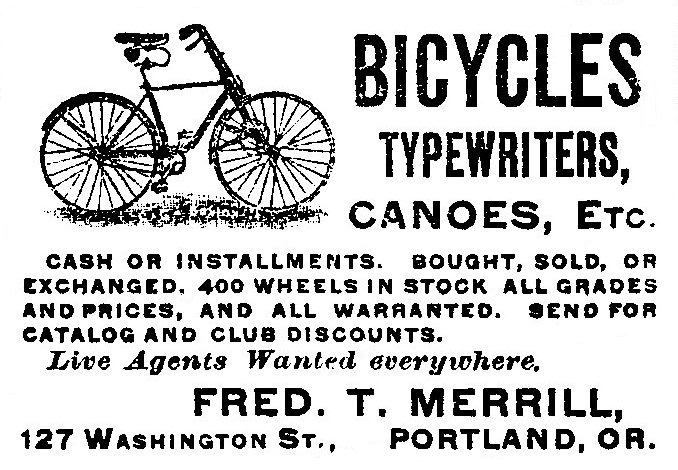
Via 718 Cyclery, here’s an amazing 1890 picture of Fred T. Merrill Bicycles, a shop in Portland, Oregon. I did a little more digging, and found this ad from the same shop, published a year later. Bicycles, typewriters, and canoes!
Happy Holidays!

I’m signing off for the holiday weekend and possibly longer. Thanks to everyone who has read, commented, or emailed me for helping me get this blog off the ground.
This has been an amazing year for biking in New York. Cycling is already up by huge percentages and seems to be growing exponentially, with new bike lanes to accommodate growing ridership. Even during the cold months of November and December we’ve seen huge numbers of cyclists riding to and from work, running errands, or simply enjoying the city by bike. It’s only going to get better in 2011.
All the best for a happy holidays!
The Unfrozen Caveman Lawyer Argument
 The New York Times finally gets around to printing some letters to the editor in response to its December 17th editorial on bikes. The selection of letters are far more balanced than the editorial was, with Transportation Alternatives Executive Director Paul Steely White the lead-off hitter.
But what would be a debate about bike lanes without Neighbors for Better Bike Lanes? No article on bike lanes generates fewer than a thousand responses, so I wonder how NBBL’s letter above all, was chosen? Could it be that Norman Steisel is using his status as a former deputy mayor to jump the queue, so to speak, as he did at the City Council Hearing on Bicycles? I’ll leave that conspiracy theory open for discussion.
NBBL would be better served by changing their acronym to NIMBY. There’s no amount of data and facts and no level of public support that could convince Steisel, Iris Weinshall, or any of the other members of this narrow group that the bike lane on Prospect Park West is a good idea. The only bike lanes they approve of are on streets on which they don’t live or drive.
As I witnessed in person, NBBL will grasp at any argument, no matter how tenuous, to make their point. We have heard that seniors are afraid to cross the bike lane because there are so many bikes, but also that the bike lane is not necessary because there isn’t a high volume of bike traffic. Both can not be true. Such is the argument borne of desperation.
At the risk of beating a dead horse, here’s their letter, and my takedown.
To the Editor:
Your editorial about the problems caused by law-evading bicyclists mentions data released by the New York City Department of Transportation that purport to show that the 50 miles of bike lanes it is adding each year “calm” traffic and cut down on fatalities.
But as the rest of your editorial suggests, the connection between encouraging biking — which we also strongly support — and making our streets safer and more pleasant for all users is far from established. The D.O.T. data produce more puzzlement than enlightenment.
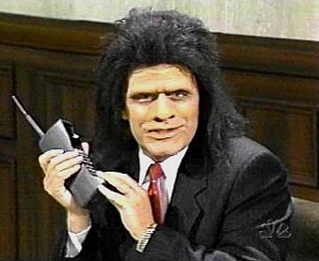
Ah, the Unfrozen Caveman Lawyer argument. “Your numbers confuse me, so they must not be true!” Actually, the connection between greater levels of cycling and safer streets is well established, and not just by the NYC DOT. There’s Peter Jacobsen’s 2003 paper published in Injury Prevention. There are also actual New York City ridership and injury/fatality statistics. Traffic injuries go down as cycling numbers go up, as a study by the city of Portland found, and not only for cyclists but for pedestrians and drivers, too. These studies are available to anyone with an Internet connection.
When new bike lanes force the same volume of cars and trucks into fewer and narrower traffic lanes, the potential for accidents between cars, trucks and pedestrians goes up rather than down. At Prospect Park West in Brooklyn, for instance, where a two-way bike lane was put in last summer, our eyewitness reports show collisions of one sort or another to be on pace to be triple the former annual rates.
Furthermore, the D.O.T. data’s lack of credibility is reinforced by our own videotapes. These show that the Prospect Park West bike lanes are used by half the number of riders the D.O.T. says, and that cyclists are not riding to commute as originally contemplated but are recreational users who could be better served by enhancing the existing lane 100 yards away in Prospect Park.
How was NBBL able to establish that the cyclists they observed were mere “recreational users”? Did they survey riders, asking them directly, “Where are you going?” If not, why should the observations of people who do not ride be trusted? (If I needed to count the types of dogs in Prospect Park, I’d bring a vet and a breeder along.) Isn’t it possible that some riders combine their workouts with their commute and change at the office or simply prefer to wear comfortable workout clothing when commuting? Besides, are recreational cyclists not deserving of a bike lane network? What about someone riding down PPW to shop at the farmer’s market or go to the library? Why should cyclists be held to a different standard than drivers? We do not portion out roads based on who will use their cars for work, who for errands, and who for pleasure.
I think the more likely truth is that NBBL simply can not contemplate how people with “real” jobs–that is, a job where you have to wear a suit and carry a briefcase and be at the office by 9 AM–could possibly ride a bike to work. Freelancers, students, parents dropping off a child at school, deliverymen, or people in jobs where every day is casual Friday simply don’t count in the traditional worldview of NBBL.
On the larger point of the DOT’s credibility based on a discrepancy between their numbers and the numbers collected by videotape, unless NBBL releases their methodology and posts their videos for all to see, they have no bearing on anything. In NBBL’s world, DOT studies are illegitimate, but “eyewitness accounts” are a perfectly reasonable way to measure year-on-year accident rate comparisons. “Collisions of one sort or another” doesn’t sound very precise to me.
By the way, Holy ACLU, Batman! Bikers, did you know there are videotapes of you riding the Prospect Park Bike lane? If the DOT did this to count the cars on Prospect Park West, NBBL would probably call their lawyers.
They do slip in the old “put the cyclists back in the park” canard which can be dismissed easily. If NBBL thinks crossing PPW is hard with a bike lane, imagine how hard it will be crossing the Park Loop with two-way bike traffic and all the other chaotic foot and rollerblade traffic. Also, many people have jobs that require them to commute at untraditional hours. The park closes at 1 AM and gets dark long before that. Would you want your wife, daughter, sister, or girlfriend riding through the park at even 8 PM in the winter?
Finally, your point about the difficulty of giving tickets to cyclists who break the law is well taken. Educating bikers is a nice idea. But requiring them to be licensed like other potentially life-threatening high-speed vehicles is the only thing that will make enforcement any easier in the long run.
Louise Hainline
Norman Steisel
Iris Weinshall
Brooklyn, Dec. 17, 2010
There’s no evidence that licensing bikes leads to safer behavior or easier enforcement. None. In fact, if they’re worried about “life-threatening high-speed vehicles” such as bicycles, they ought to be in favor of more bike lanes with more bikes in them, a recipe for slower speeds.
The irony here is that the letter’s first signer and NBBL president is Louise Hainline, the Dean of Research & Graduate Studies at Brooklyn College. (Just four miles away from Prospect Park West, making Hainline a prime candidate for bike commuting.) Presumably, she’s teaching her students how to study and collect data and may have, at one point in her studies, taken a class on statistics. She’s also a professor of psychology, so she may want to ask herself how her personal opinions and NIMBY-style reactions to the bike lane are shaping her perception of all of these puzzling facts. Physician, heal thyself.
Quote for the Day
I like to say that people support change as long as things look exactly as they did before. – Janette Sadik-Khan
Room For Debate
Run or bike–don’t walk–to the New York Times to check out their Room for Debate series on bike lanes.
If we complain when the New York Times runs not one, but two anti-bike editorials within one week, we ought to applaud when it runs something like this. (Although it’s just online, which may not reach the grey-haired reader who shakes his fists at a biker ten feet away from him, all the while ignoring the taxi about to run him over. Baby steps, New York Times, baby steps.)
My favorite of the five different takes on bike lanes comes from Felix Salmon, the Reuters blogger, who pleads for patience: “Did these people really think that New York would become Copenhagen overnight?” I would argue that Copenhagen didn’t become Copenhagen overnight.
Salmon also suggests that one the big benefits of building out a city’s bike infrastructure is that it breeds good behavior. I’ve often felt that it’s not just a matter of “If you build it, they will come,” but also “If you build it, they will play by the rules.” Salmon:
Take a New Yorker, put her on a bike in Berlin, and she’ll behave perfectly well, stopping at lights along with everybody else, and riding in the right direction on the street. It’s not the people who are the real problem, it’s just how those people behave when they’re on the streets of New York.
Caroline Samponaro of Transporation Alternatives adds some empirical evidence to this point in her piece.
Bike lanes insert order on streets that were once governed by chaos. Before bike lanes came to Brooklyn’s Prospect Park West, 75 percent of cars were speeding. With the lanes installed, fewer than one in four cars break the speed limit. On Manhattan’s Ninth Avenue, sidewalk cycling fell 84 percent after the bike lanes went in. According to the Department of Transportation, streets with the lanes see 40 percent fewer fatal or injurious crashes than streets without them.
Even Sam Staley’s essay, which argues that frigid temperatures will make biking only “a small part, even tiny part in most cases, of America’s solution to congestion and mobility,” seems reasonable, although I suggest he visit Copenhagen and Amsterdam, or take Salmon’s advice to be patient. If one day cycling infrastructure is woven into the fabric of New York City streets, falling mercury will hardly be a deterrent to getting around by bike.
Finally, I did agree with Robert Sullivan’s sarcastic take on bike lane criticism. Responding to the idea that bike lanes aren’t used very much during the winter, he writes, “Oh, yes, by all means, take them based on this period of low usage, and then, using the same logic, let’s take out the BQE, because there are hardly any cars on it at 3 in the morning.”
On that point, I leave you with this picture of Prospect Park West, taken midday yesterday. Can we get rid of the car lanes?

 Brooklyn Spoke