“I’m for the bikes” but…
This will go into my collection of quotes from people who aren’t against bike share but who are actually against bike share.
[Soraya] Mackhrandilall said she was never against the bike share itself, only the placement of the stations. Now that her building’s dock has been moved, she said, she supports the program.
“Now I can say, ‘Use the bikes,’ because I’m for bikes,” she said. “I still don’t like the color of the bikes. It doesn’t fit the neighborhood, but we have to pick our battles.”
As long as Mackhrandilall can’t see the stations and bikes, she’s in favor of bike share.
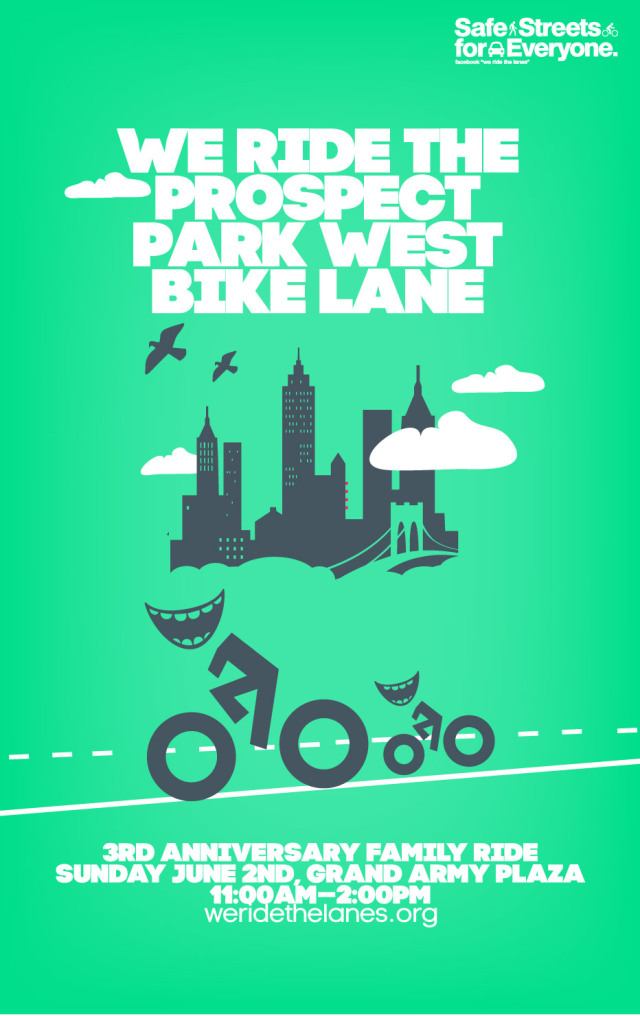
As hard as it may be to believe, the Prospect Park West Bike lane will soon be three years old! To celebrate, please join families of all shapes and sizes for a 3rd Anniversary Family Ride on Sunday, June 2nd from 11 AM to 2 PM.
More details to come, but there will be contests, prizes, food, and lots more. The 2011 ride was a lot of fun and this one promises to be even better now that the lane is a true fixture of the neighborhood. Please bring the kids and add your two wheels of support to the best bike lane in Brooklyn!
History repeats itself

Narrative.ly has a feature by Daniel London titled “Cycles of Fashion” that’s an informative look at the rise and fall of the bicycle craze of the late 19th century. This passage will certainly resonate for anyone who follows the debate over cyclist behavior, the language of the tabloids, and, yes, the extreme sanctimony of some cycling advocates:
“Scorching,” or riding extremely fast, was seen as not only dangerous, but a sign of low-class loutishness. The New York Times reported that ”with the cheapening in the cost of bicycle riding in the public streets has come the abuse of that privilege by thousands of ignorant and loaferish individuals… irresponsible and reckless young men to whom a stable keeper would not entrust a saddle horse, and who are not fit to ride anything but a rail.” Several dozen cycling schools and innumerable etiquette guides were produced which would help the wheeled bourgeoisie not only learn to ride, but “ride right.”
The bicycle was a private vehicle in public space, and hence a topic of moral and political import. Opponents of the bicycle claimed that the wheel undermined morality (amongst other things, by enabling young women to venture great distances without supervision), caused noise and interfered with traffic. Conversely, bicyclists claimed that “the more ignorant, uncultured, and generally illiterate and ‘countrified’ the man is, the more bitter is his hatred of the bicycle”—and lobbied for bike-friendly legislation, paved roads and additional bicycle lanes. (Sound familiar?)
Bike to Work Day 2013 (aka “Friday”)
This is just a small sample of the bike traffic I saw on the Manhattan Bridge this morning. To put the video in context, I shot this after 9:00 as I rode home. The bike volume for the morning had likely peaked sometime between 8 and 9 AM.
Small set of pictures here.
Hope you had a great ride this morning.
“The warnings were dire.”
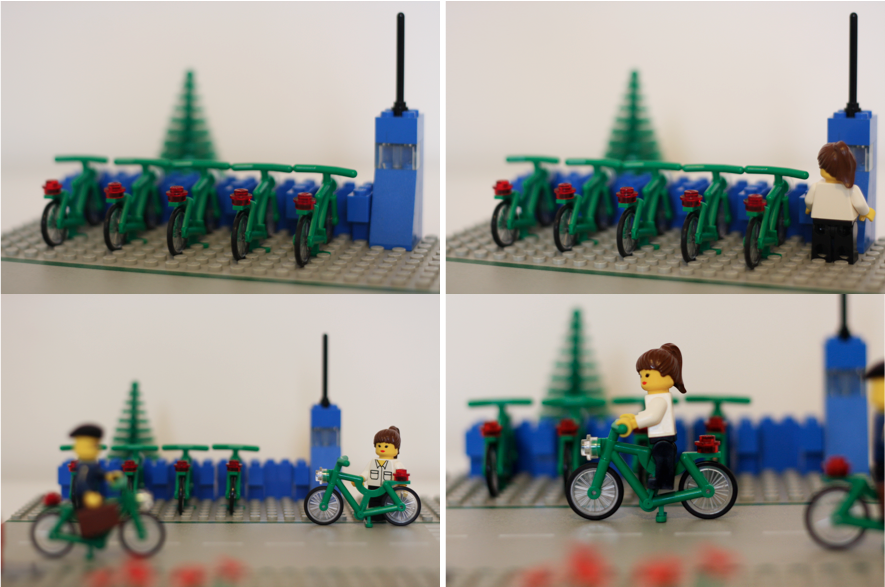
Tom Vanderbilt has a great take on the heated reaction to bike share we’ve seen in New York lately, relating it to one of the many changes this city has seen during its esteemed history.
Insofar as they alter entrenched travel patterns, change urban landscapes, and carry people into parts of town where they previously hadn’t been carried, new transit systems by their very nature tend to be magnets for opposition. (And here it should be noted that Citi Bike is perhaps the least disruptive transit system that has ever been adopted by New York City, at least in terms of its construction and operation.) In its earliest phase, the debate over Citi Bike appeared to echo the debate over another profound change to New York City’s streetscape a half-century ago: the installation of on-street parking meters. At the time, critics declaimed them as “unconstitutional.” Lawsuits were mounted. The warnings were dire. There would be vandalism! People would try to cheat the system! The meters would only make traffic worse! Today, of course, parking meters are universally viewed as simply an irrefutable cost of driving a car in a crowded city, and the only real debate left is over how much to charge per 15 minutes.
His description of how Citi Bike fits into the taxonomy of social change is particularly astute. It’s been interesting to see New York move from the “controversial” and “progressive” stages during the PPW-era bikelash to today’s “obivious” stage with bike share.
We’ll probably backtrack a little into silliness the minute some poor schlub doesn’t read the pricing structure and gets hit with a $200 multi-hour bike share ride — “Bike Snare!” as the Post will title the story — but the inevitability of such a moment proves that Citi Bike is already an established part of the New York City landscape before it has even launched. To paraphrase Tom, the only real debate left is be over how much to charge per 45 minutes.
Sunday: Moms on Bikes

This Sunday, May 19th, WE Bike NYC is hosting an event in Carroll Park to introduce bike-curious moms (and dads, too!) to bicycling with kids. Volunteers and representatives from various shops, including Rolling Orange, Red Lantern, and Bikesmith, will be there with everything from Dutch bakfiets and longtails to trailers and basic bike seats to demonstrate the best way for families of all sizes to get around by bike. Oh, and apparently there will be ice cream from Uncle Louie G. You know, for the kids.
As a proud biking papa, I can personally attest that taking your child around by bike is one of life’s greatest pleasures, opening up the city in ways no stroller can. Many thanks to WE Bike for putting this event together.
Bike Share Before and After
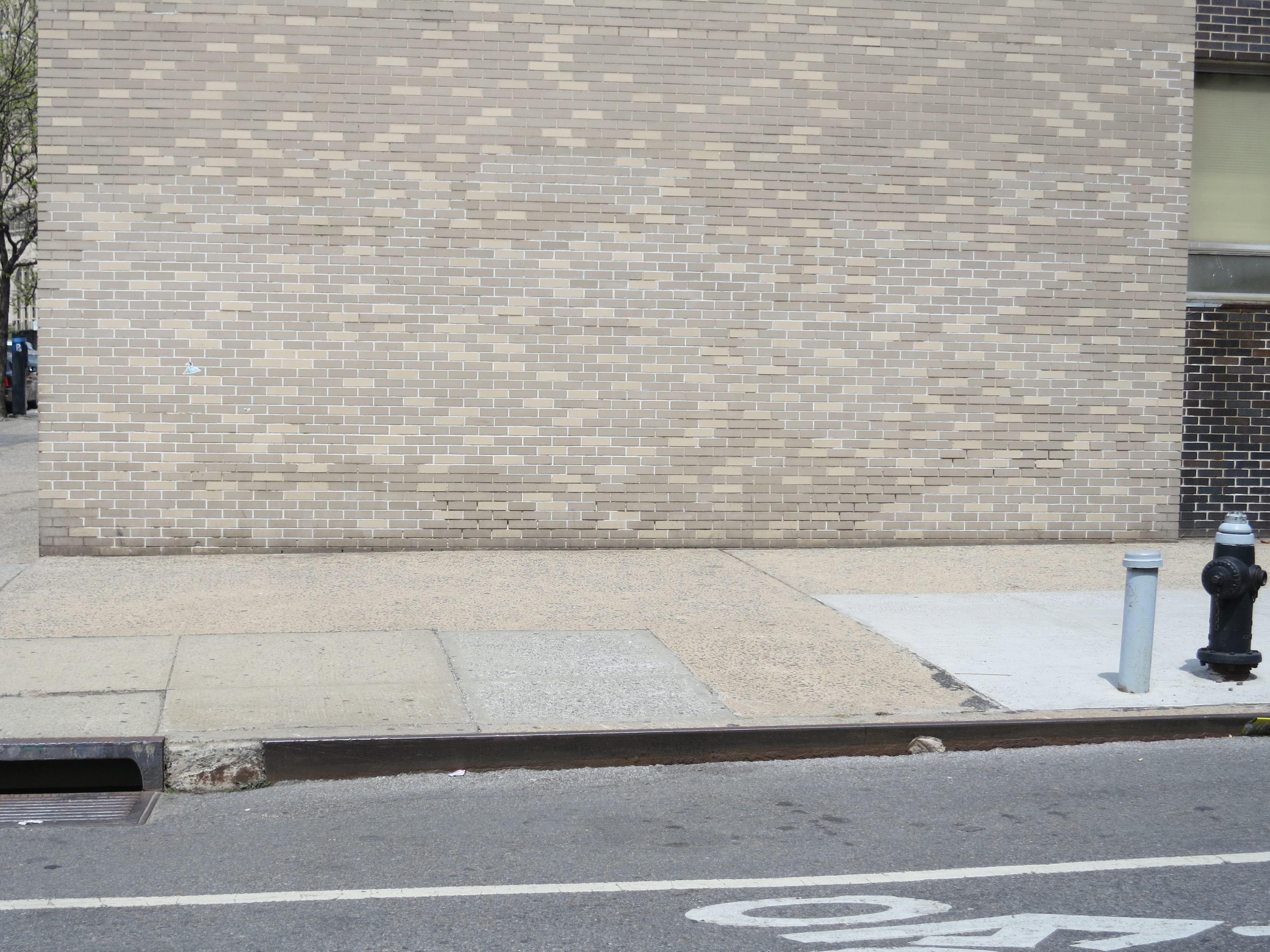
Here’s the corner of Dean Street and 4th Avenue before a Citi Bike station was installed:
And here’s the same corner after Park Slope’s only Citi Bike station went in on Tuesday:
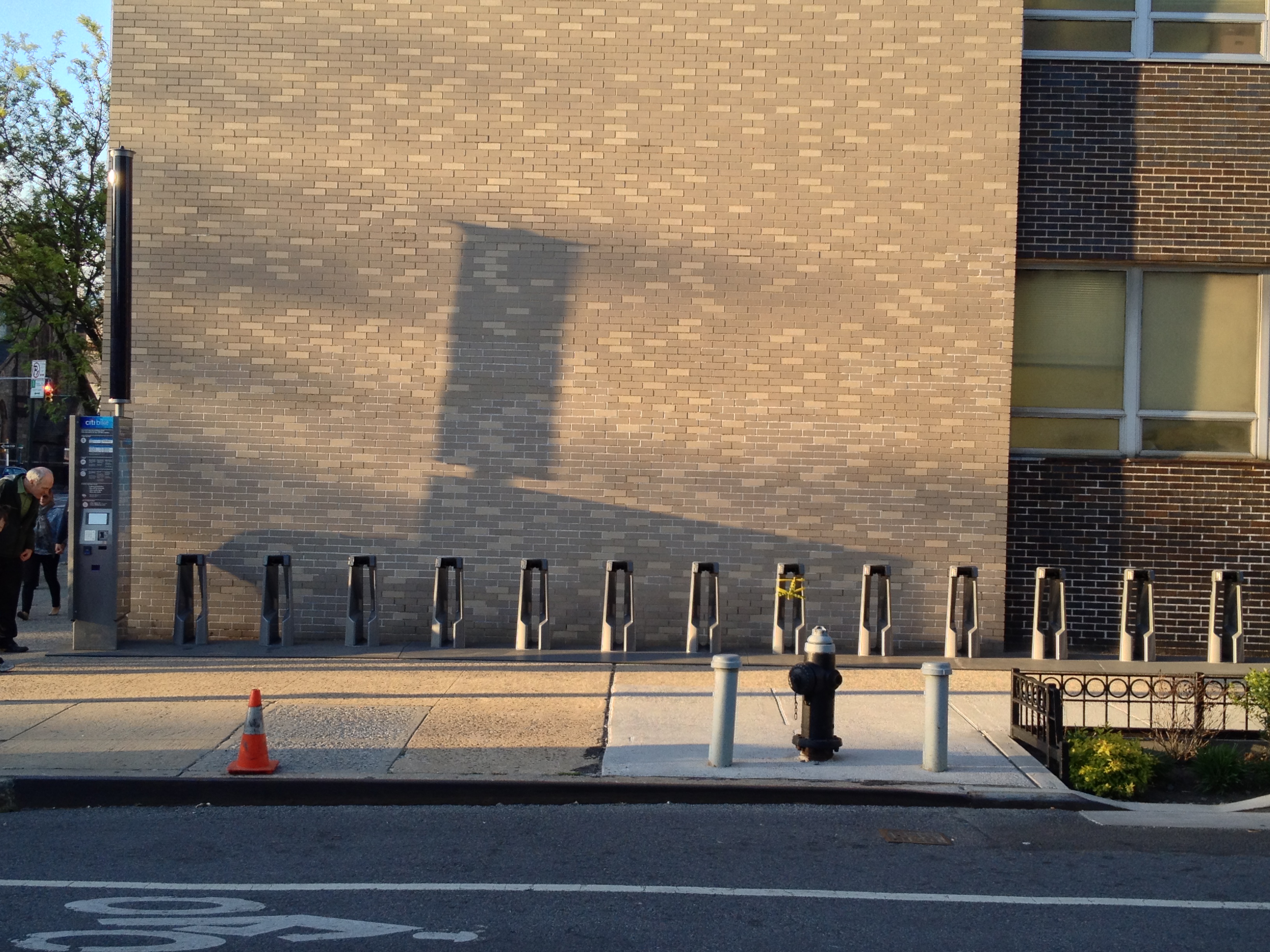
I happen to love this location not only because it’s within walking distance of my apartment, but also because it brings an otherwise dead corner with a blank wall to life, activating the space for people. When I stopped by to take this picture, someone was checking out the kiosk, a dad was explaining bike share to his kids, and a few others were snapping their own photos. Of course, this initial curiosity will soon turn into the quotidian utility of accessing transportation, but the space will still be active. Jane Jacobs would approve.
The Daily Snooze

Man, look at this hipster!
Yawn. Another dumb story in the Daily News trashing something related to bicycles. Here are some things to keep in mind before reading or reacting to Simone Weischselbaum’s review of the Citi Bike bicycles:
- The story appears in the Daily News.
- The exact same bicycles are used in London, Boston, Chattanooga, and Washington, DC. Similar bicycles are used in Paris. The editors of the Daily News clearly hate New Yorkers, believing them to weaklings.
- By sending what it describes as its “bike snob” to ride a Citi Bike, the entire story is, in fact, its own “Some of my best friends are bicycles” quote from a disgruntled NIMBY.
- If you get into a Twitter or comment war over how fast you can ride a 45-pound bicycle, you’re playing the tabloid’s game, which is a fool’s errand. The Daily News exists in an alternate New York City where physics, logic and the actual experience of sentient beings do not exist. Only page views and parking matter there.
- Weischselbaum, her editors, and fellow writers have spent years demonizing hipsters who ride bicycles, just like the one pictured in this Daily News story.
- Weischselbaum says she could only muster enough energy to go 7 mph on her Citi Bike. So I guess bike share won’t be “hell on wheels” after all. (If you’re looking for a more consistent anti-bike narrative, read the Post.)
- Take comfort. Eventually, there will be more Citi Bike users than Daily News subscribers.
Citi Bike Countdown: Testing the Docks
I happened upon this Citi Bike crew on Hudson and West Houston just a little while ago. They’re roaming the city today, testing stations and docks to make sure they properly engage and disengage bicycles when a key is inserted, just as annual members will do. The next step after this is the delivery of each station’s bicycles, although there’s no word on exactly when that will begin.
This video shows how easy it is to take the bikes in and out.
Some more pictures, below:

Docking a bike
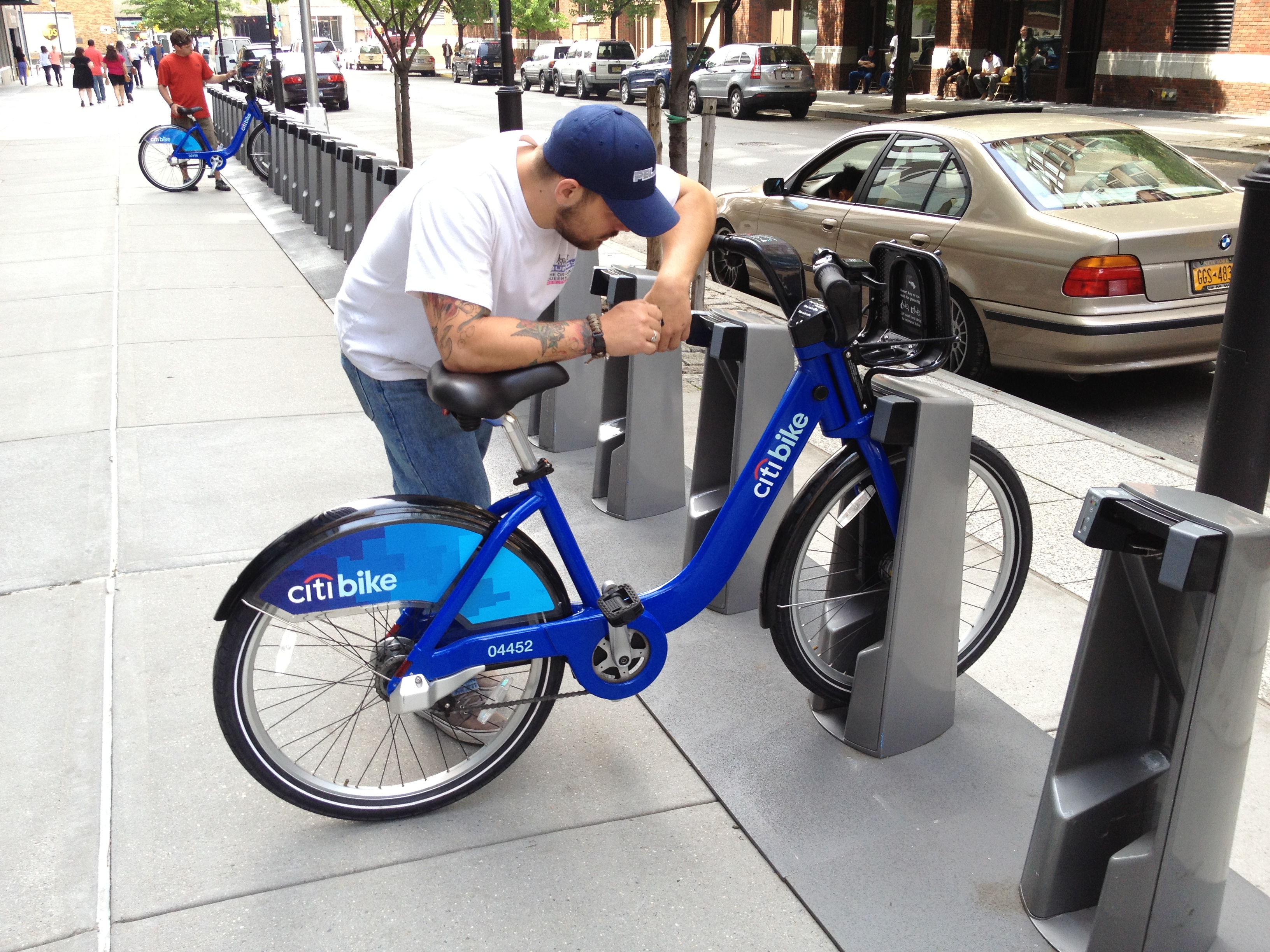
Checking to see if the bike is locked.

The light is green, the dock is clean.
The Bike Share Criticism Challenge
If you follow me on Twitter, you may have seen a few of my rather straightforward tweets in which I repeat some of the main criticisms of bike share offered by NIMBYs as they fight tooth and nail to move Citi Bike stations from their blocks. These tweets are typically followed by pictures that belie that very criticism, showing that the problem they’re predicting bike share will cause already exists and is caused by cars. Yet somehow the NIMBY logic doesn’t extend from removing bike share stations to also removing car parking.
Here are some of the typical NIMBY complaints about bike share stations, accompanied by pictures. If you have a response or an addition, please leave it in the comments. I’ll even send an “I [BIKE] BKLYN” button to anyone who can come up with a fair criticism of bike share that doesn’t also apply to cars.
1. Bike share stations pollute the street environment with brightly colored corporate advertising.

2. Bike share stations do not belong in historic, landmark blocks, some dating back to the 19th Century.

3. Bike share stations block pedestrian access to the curb.

4. Bike share stations block pedestrian access to residential buildings.

5. Bike share stations block pedestrian right of way on the sidewalk.

6. Bike share stations make garbage collection difficult and cause trash to pile up between docks.

7. Bike share stations clutter sidewalks all in the name of promoting a private business.
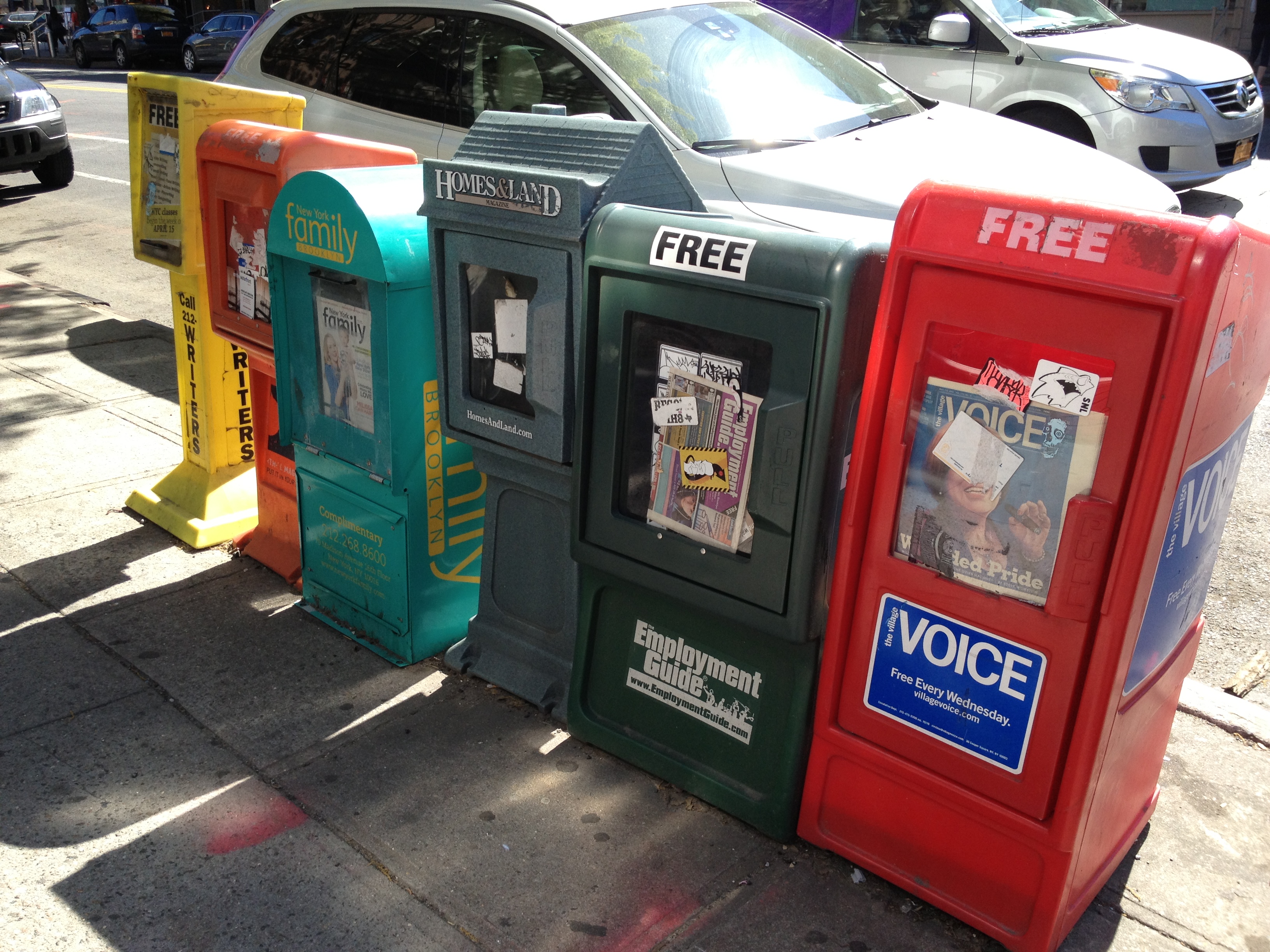
8. Bike share stations are much smaller in Europe with only 10 to 20 bikes each.

9. Bike share stations will bring noise to otherwise peaceful neighborhoods.
 Brooklyn Spoke