Southern Comfort
I am always comforted when I see the same tired arguments used to opposed sensible infrastructure improvements. When the same arguments used elsewhere are the ones that failed here, it means that we’re winning. From the Atlanta Journal-Constitution.
It’s getting a little out of hand, some residents say, particularly many of the 1,000 homeowners along Mount Vernon and some who drive it.
“We’re not against bike lanes. It’s the width of the lanes we object to,” said Meredith Carmichael, who lives along Mount Vernon. “Why is 1 percent of the traffic getting more than a third of the roadway?”
Several residents have also complained the city never held a specific information session for the public to comment about the bike lanes.
The next thing you know, NBBL will sue Meredith Carmichael for copyright infringement. The good news is that Dunwoody’s mayor, Mike Davis, thinks bike lanes are “an essential ingredient in the city’s future success at drawing young families.”
The future belongs to bikes.
No Impact Man Avoids Impact
Colin Beavan, aka “No Impact Man,” slipped on a metal road plate while riding his bicycle, spraining his left arm and bruising a rib. Thankfully, he was in the protected Kent Avenue bike lane.
“If it wasn’t for the bike lane, I would have gotten run over,” he said. “A car would have been bearing down on me. At least I could fall into an area safely.”
I’ve fortunately avoided any major injury, but have had a few close calls with cracked pavement, potholes, and metal plates where, had I gone down, I surely would have been crushed by a car. Too many of our roads are completely unforgiving; one false move and you’re toast. Wouldn’t it be nice to have more spaces where tiny mistakes aren’t punishable by death?
I’m glad that Beaven used his accident — and the normally controversy-prone Gersh Kuntzman — to provide a teachable moment.
Thirty is Dirty

Via Copenhagenize:
Here’s an illustration from the Swedish Road Directorate, showing what it’s like to have 30 mph speed limits in a city. And New York is bragging about 30 mph? Is it possible to be more out of touch with reality and statistics?
Mikael also writes:
Why isn’t Manhattan one big 20 mph zone? In two years, 80% of Barcelona will be covered by 20 mph zones. Over 80 cities in Europe have adopted them.
Sadly, as the radical pro-car lobby and its supporters like to remind us, this is not Europe.
Kübler-Ross for NIMBYs
“Our take? Deal with it. This bike plan represents a tectonic shift in the city’s approach to transportation and it’s too big a lift for every body to get to put his or her two cents in about every location.” – Brownstoner
I was initially a little hard on Brownstoner for amplifying this Gersh-Kuntzman-created nontroversy. Whereas Brooklyn Heights actually does have a few well-organized residents fighting proposed bike share locations, Fort Greene so far has… a guy named Wyatt Cheek. So I tip my helmet to Brownstoner for giving its readers a little tough love.
Compared to the Prospect Park West Bike Lane saga, which at times felt like it would continue into Chelsea Clinton’s second mayoral term, these minor bikelash flareups seem to be ending almost as soon as they begin. Perhaps we even have NBBL to thank for helping us accelerate the pace this time around. Bike share will destroy a neighborhood’s historic character? Been there, done that. More bike riding will lead to “pedestrian perdition”? That is so 2011.
This recent spate of silliness reminds me of my favorite episode of The Simpsons, “One Fish, Two Fish, Blowfish, Blue Fish,” in which Homer eats a poisonous fugu fish at a sushi restaurant and is subsequently told by Dr. Hibbert that he has less than twenty-four hours to live. In response, Homer cycles through all five of the Kübler-Ross stages of grief in about twenty seconds. It’s a hilarious moment, but it also serves as a clever plot device: it allows the story of how Homer spends his supposed last day on Earth to really take off.
Perhaps this city’s controversy-driven media and parking-obsessed NIMBYs are in the midst of their own Homer-like stages of grief. By my estimation, we’ve already made it through the first three:
- Denial: “The bike-share program…has already been plagued by questions of its viability.”
- Anger: “I don’t think there have been enough meetings to call people out and discuss real specifics.”
- Bargaining: “Stanton urged the city to relocate proposed docks on Henry Street at Joralemon and Middagh streets and put them on the wide sidewalk on the south side of Tillary Street at Cadman Plaza.”
We’re not quite at the depression stage yet, but it will come. I once spoke to a NBBLer who told me that she was so upset by Prospect Park West’s reconfiguration that she had thought about selling her apartment, so I’m sure more than a few Brooklyn Heights residents will be kept up at night by thoughts of vagrants sleeping on bikes or drug deals going down behind station kiosks. An idle bike share station is the tabloid writer’s playground, so be prepared for a flurry of articles in the fallow period between the first station’s installation and the full system’s launch.
As for acceptance, it’s coming, too. One need only learn from the recent history of Washington, DC — “Remember when a few people opposed bikeshare?” — and Boston — “Bike-sharing program is on a roll” — to understand that as soon as Citi Bike opens for business it will really take off.
“Bikes are good.”
“Ditmas Parkers: We want more bike lanes,” via The Brooklyn Paper:
“Bikes are good and anything that encourages people to come to this neighborhood will help us,” said Sam Levin, the manager of Cortelyou Hardware. The store is now on Transportation Alternative’s bicycle-friendly list and is offering a 10-percent discount to any customer who shows up on a bike. “Bike lanes also will make the street safer for bike riders.”
I love that the quote from a local who supports bike lanes doesn’t come from the owner of a trendy bar or restaurant that symbolizes the gentrificapocalypse, but straight from a manager of a good, old fashioned hardware store. While the chair of CB14’s transportation committee is predictably chafed about wrong-way cyclists and making sure bike lanes go on “appropriate” streets, it’s the real New Yorker, the man who sees the street and how it’s really used, who gets it.
Free Parking is an Affront to ‘History’
In a story in the Local titled “Washington Park Residents: Bike Share is an Affront to ‘History,'” just one Washington Park resident is quoted as saying anything of the sort:
“The [kiosk is] much too large and out of place for [this block],” said Wyatt Cheek, who lives on Washington Park. “We just want it to be at a location that doesn’t interfere with [residents].”
The main objection on the block appears to be aesthetic, with residents complaining about the program’s bright blue, bank-logo–covered kiosks.
“The notion of having Citi Bike logos … will go against the [landmark] character,” said Mr. Cheek.
The truth of the matter is that by the standard raised by this lone resident, very little of what appears on Fort Greene streets fits the historic aesthetic. I biked through the area on my way home from work on Friday and quickly found examples of vehicles that are wildly out of sync with the brownstone character of this park block.
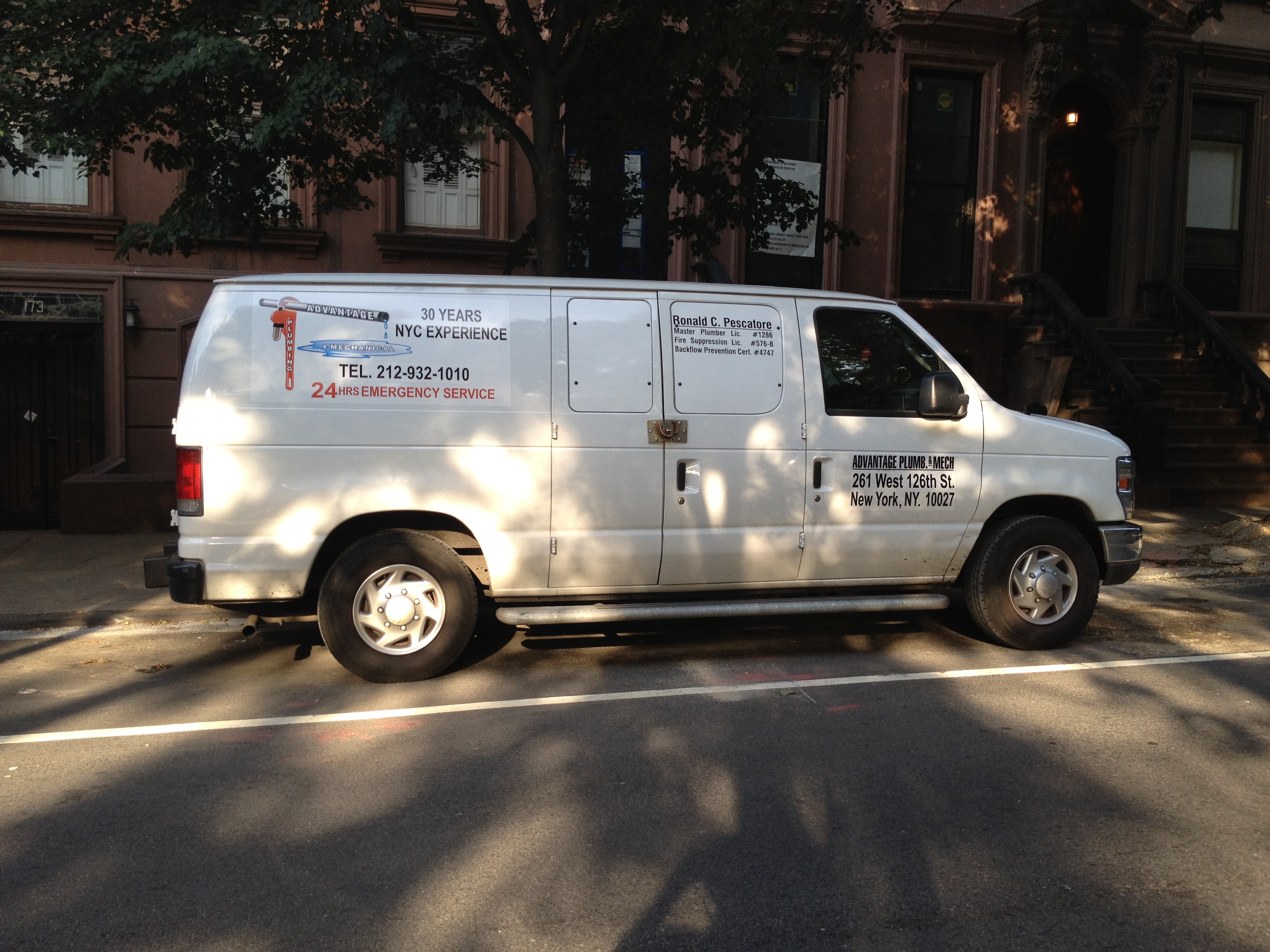
I’m willing to bet that this van, as much as ad for its owners business as it is a means of transportation, prompted no calls to 311 or the Landmarks Preservation Commission. Granted, the van itself is not a permanent fixture, but the parking space is; what comes in and out of it fits or does not fit the historic aesthetic to varying degrees that change with each alternate side parking day. This van could very well be replaced by a Model T from some automobile enthusiast’s collection, but it could also be replaced by the Oscar Meyer Weinermobile.
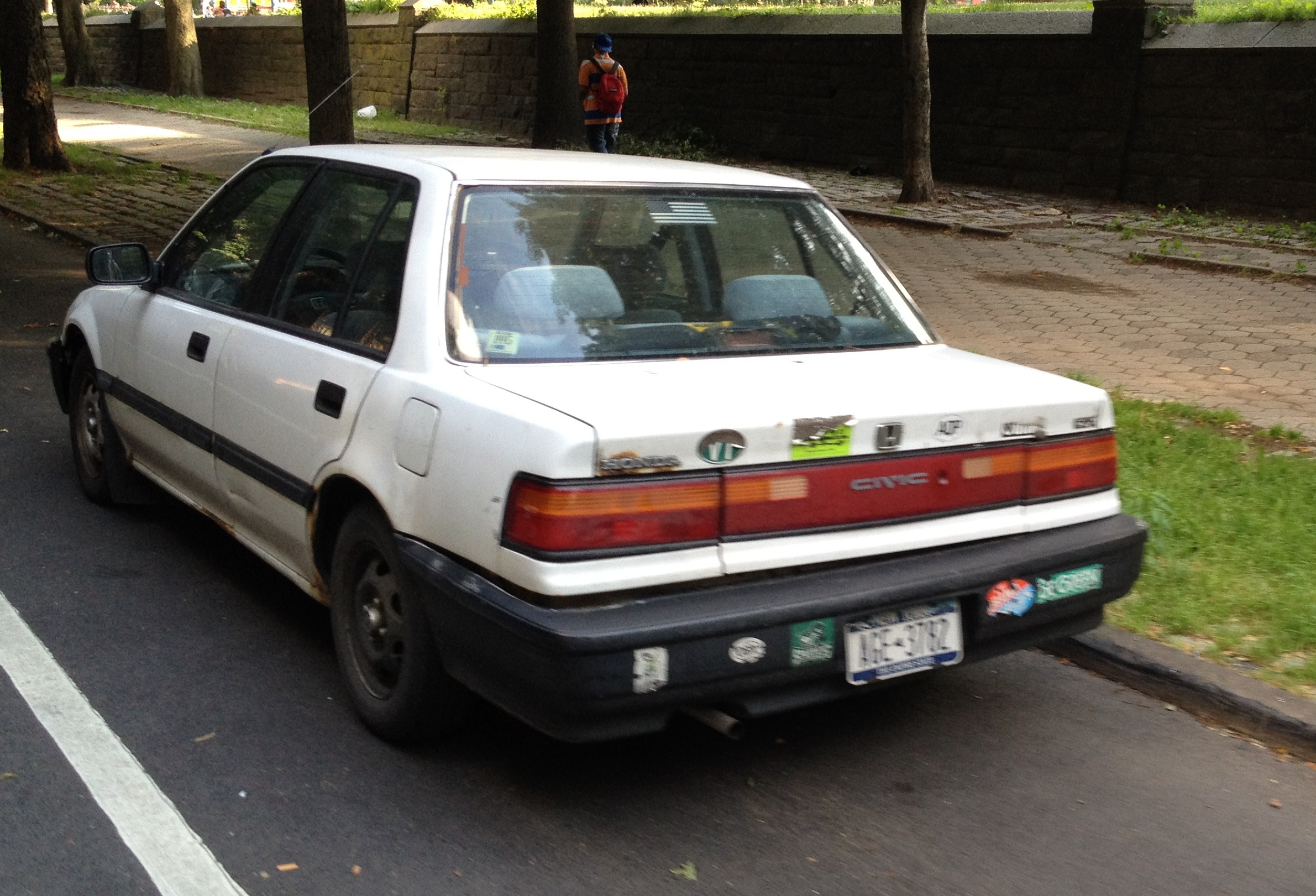
Remember, bike share stations interfere with the neighborhood’s historic character, but a 1993 POS laden with bumper stickers is in keeping with brownstone Brooklyn’s historic aesthetic, so long as your history only dates back to the Clinton administration.
The truth is that our city streets are lined with dozens upon dozens of corporate logos, from the Chevrolet bowtie to Audi’s four rings. Granted, none may seem quite as in your face as a big batch of blue bikes, but the cumulative effect of so many small logos on a neighborhood’s character is arguably the same, if historic accuracy is your thing. I guess it all depends on your point of view; I happen to think that the symmetry of a bike share station filled with bikes is aesthetically pleasing.
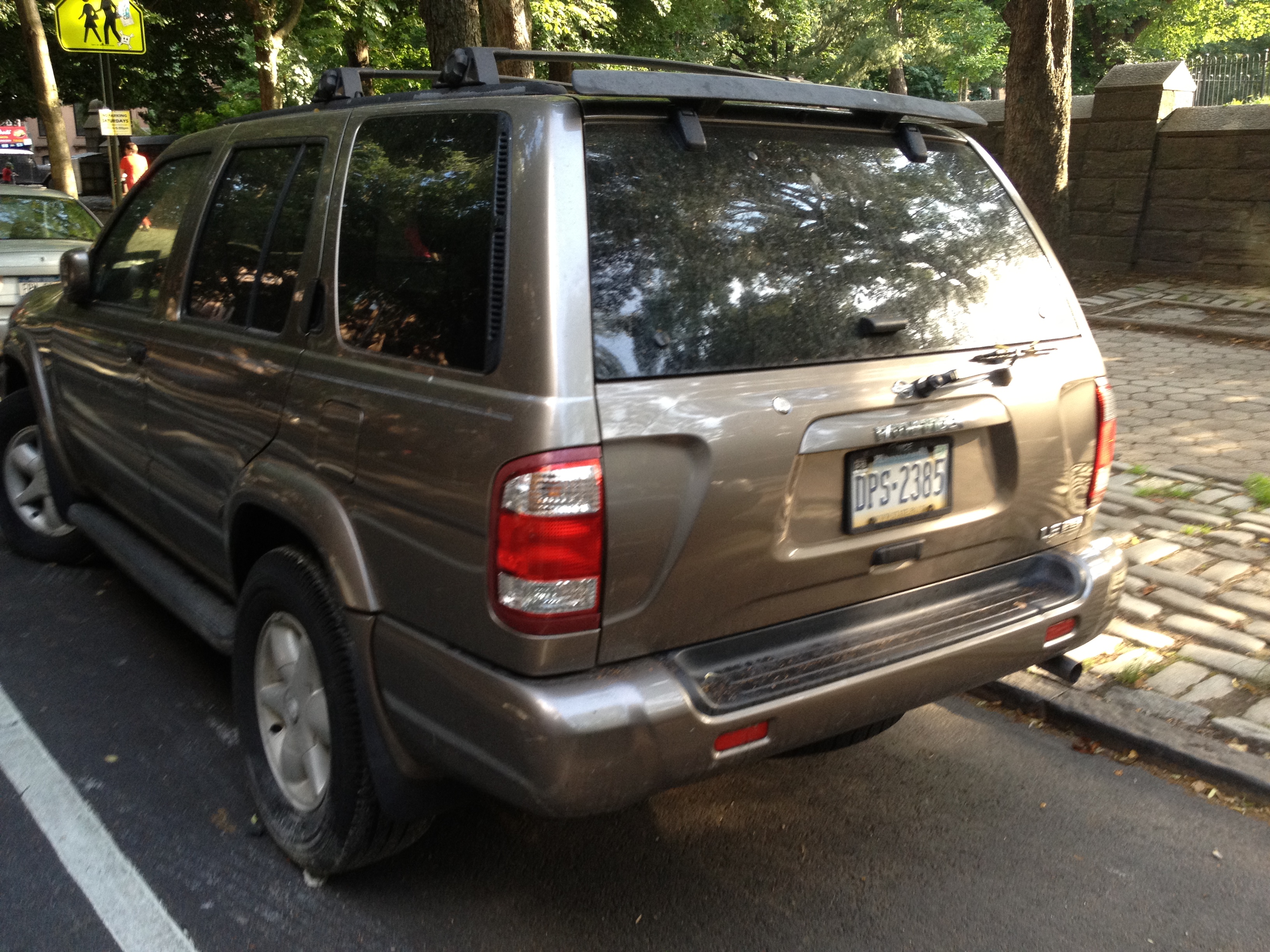
Calling bike share stations — or, for that matter, bike lanes — and affront to history ignores the ever-changing nature of our streets and is, I suspect, largely a cover for despair over the loss of private automobile storage on public land. What really takes parking spaces away from good, honest Brooklyn motorists is not the occasional bike share station or traffic calming project, but cars with out-of-state plates, which made up approximately ten percent of the cars parked near the park when I rode by. And I’m willing to bet that most of them did not belong to people just visiting for the weekend.
Car Talk’s Tom Magliozzi is car-free
NPR’s “Car Talk,” is going off the air after twenty-five years. Careful listeners know that the brothers are about as anti-SUV as two guys whose stock in trade is automobiles can be.
“Car Talk,” hosted by Tom and Ray Magliozzi (aka Click and Clack), is the most popular entertainment show on U.S. public radio, heard by 3.7 million people each weekend. It’s one of car culture’s major pop icons. In an unusual spurt of semi-seriousness, the wisecracking brothers and MIT-educated auto mechanics decided recently to launch a political crusade of sorts, against sport-utility vehicles. It turns out that the Magliozzis are not especially fond of other types of automobiles, either: “I do not own a car,” Tom admitted. “I either ride a bicycle or use public transportation.”
The brothers also used their show as a platform for educating listeners about the dangers of distracted driving.
I haven’t owned a car since shortly after I moved to New York in 1998, but I remained a loyal “Car Talk” listener. It’s a testament to their genius that they took something as seemingly boring as endless discussions about knocks and pings and stuck gear shifts and turned it into entertaining radio. Thankfully, Click and Clack’s archive is so deep that NPR will “actively produce new shows built from the best of its 25 years of material – more than 1,200 shows – with some updates from the brothers.”
Amsterdam Through My Daughter’s Eyes
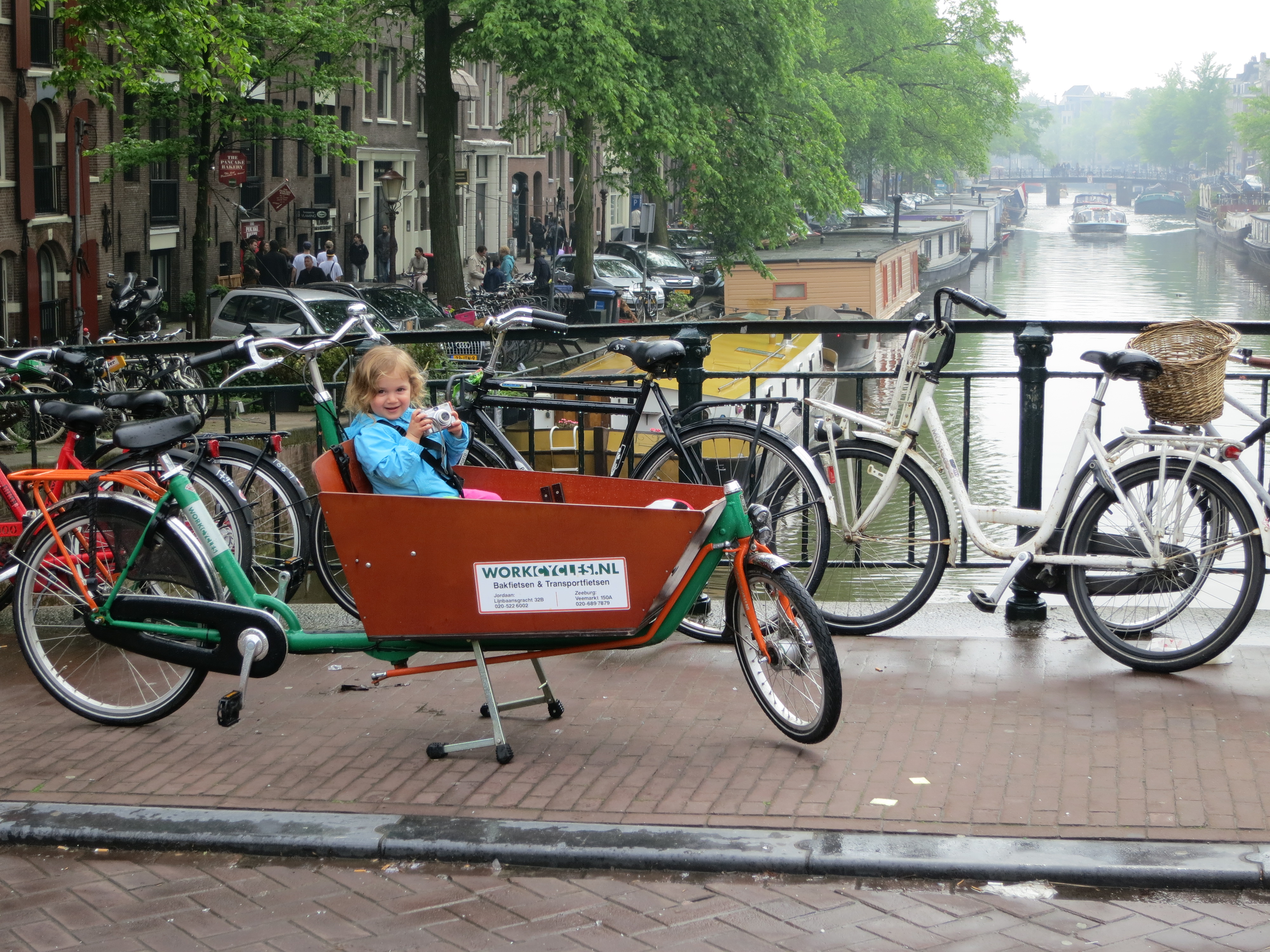
If you follow me on Twitter, you already know that I was in Amsterdam for a family vacation. After we picked up the excellent Workcycles cargo bike pictured above I gave my two and a half year old daughter an old digital camera, figuring it would keep her occupied on some of our longer sightseeing jaunts and bike trips. I taught her how to push the shutter button and my only instruction to her was, “Hold it up.” While I realize that every picture was a happy accident, I like to imagine that she composed them with purpose and artistry. What follows are highlights; the full set of her vision of Amsterdam is on Flickr.
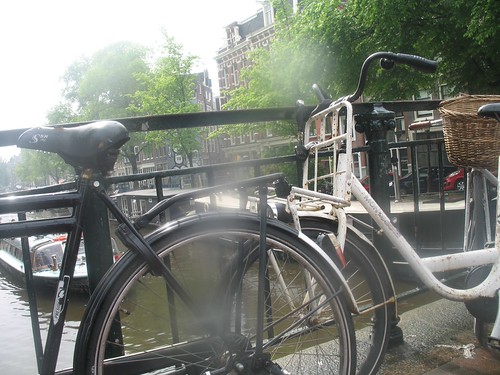
Compare the picture above with the picture at the very top of this post. She took this one moments after I snapped the one of her in the bike. You can see the tourist boat further away in the shot I took and just about to go under the bridge in the shot she took.

The photo above was taken on Westerkade in front of our apartment in the Jordaan. We parked our bikes here and the front corner of the bakfiets can be seen on the right side of the picture.

With rain in the forecast, we decided to hit some of the more touristy sites during our first full day in Amsterdam. Here I am at Museumplein. My daughter may have figured out how to compose this picture because my wife was standing next to her with my camera taking the same one.

She took more than a few shots of the floor of the cargo bike. This one was taken after we waited out the rain at a cafe over lunch.

After our first rainy day we had nothing but perfect weather for the rest of our trip. We took a day trip along the Vecht to the town of Loenen, about 22 kilometers south of Amsterdam. We were on separated bike paths for almost the entire time. I saw this picture after we stopped and was pretty impressed that my daughter managed to place my wife in the center of the frame while we were both moving.

We stopped for lunch along the way. Here’s a less than flattering shot of me and my wife with our faces stuffed with cheese sandwiches.
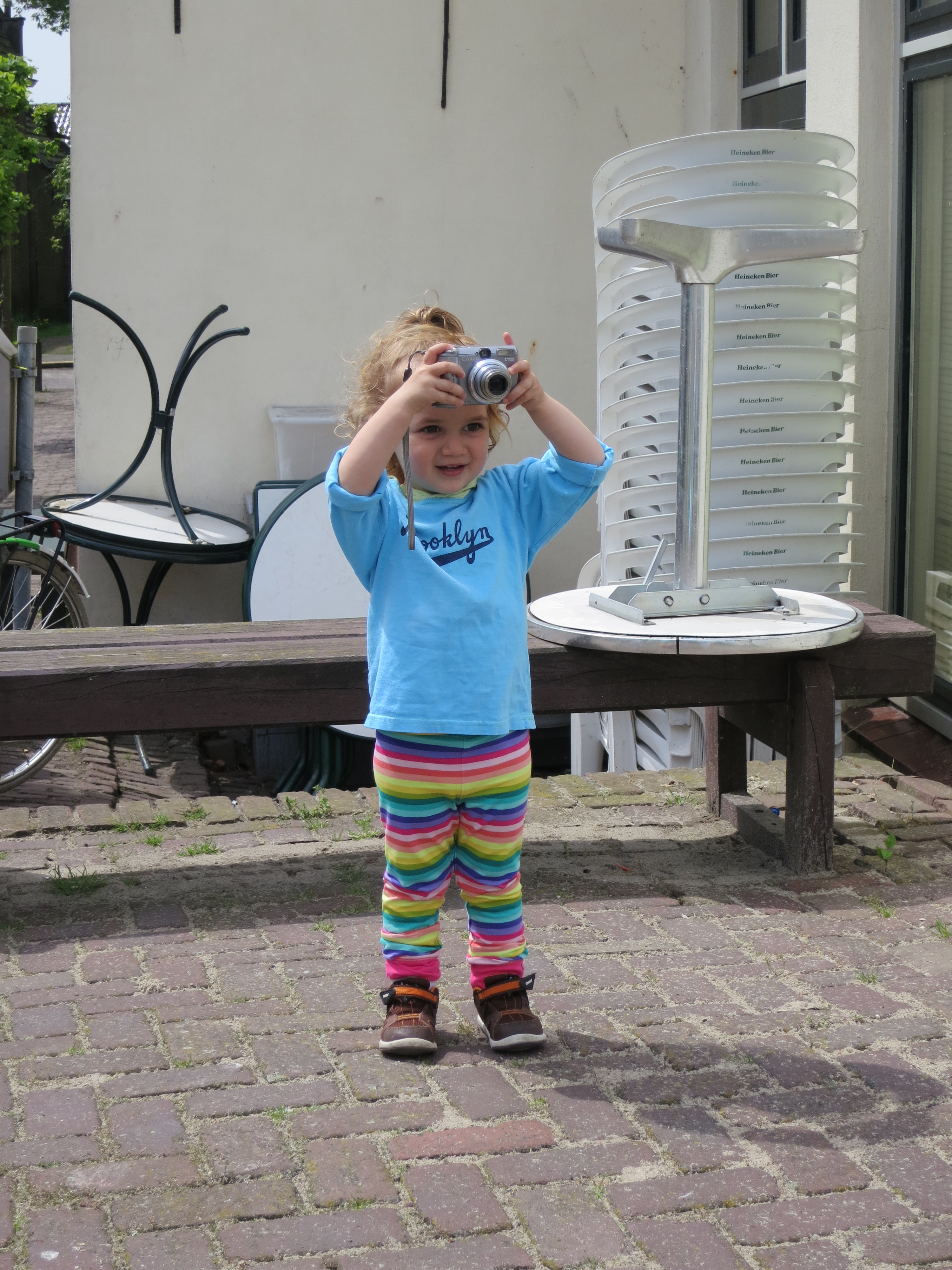
I took my camera out and took a picture of my daughter taking a picture of us. It’s in the same location as the shot right above it, but from the reverse angle.

When we returned to Amsterdam, we went out for rijstaffel, a traditional Dutch colonial Indonesian feast. My daughter took a few self-portraits while we waited for our food. This one is my favorite.

My daughter loved the train ride, but didn’t ask to have the camera at any other time during our trip to the Hague.

This is Marnixstraat, behind our apartment. I’ll have to ask Michael Colville-Andersen if this qualifies as Cycle Chic.
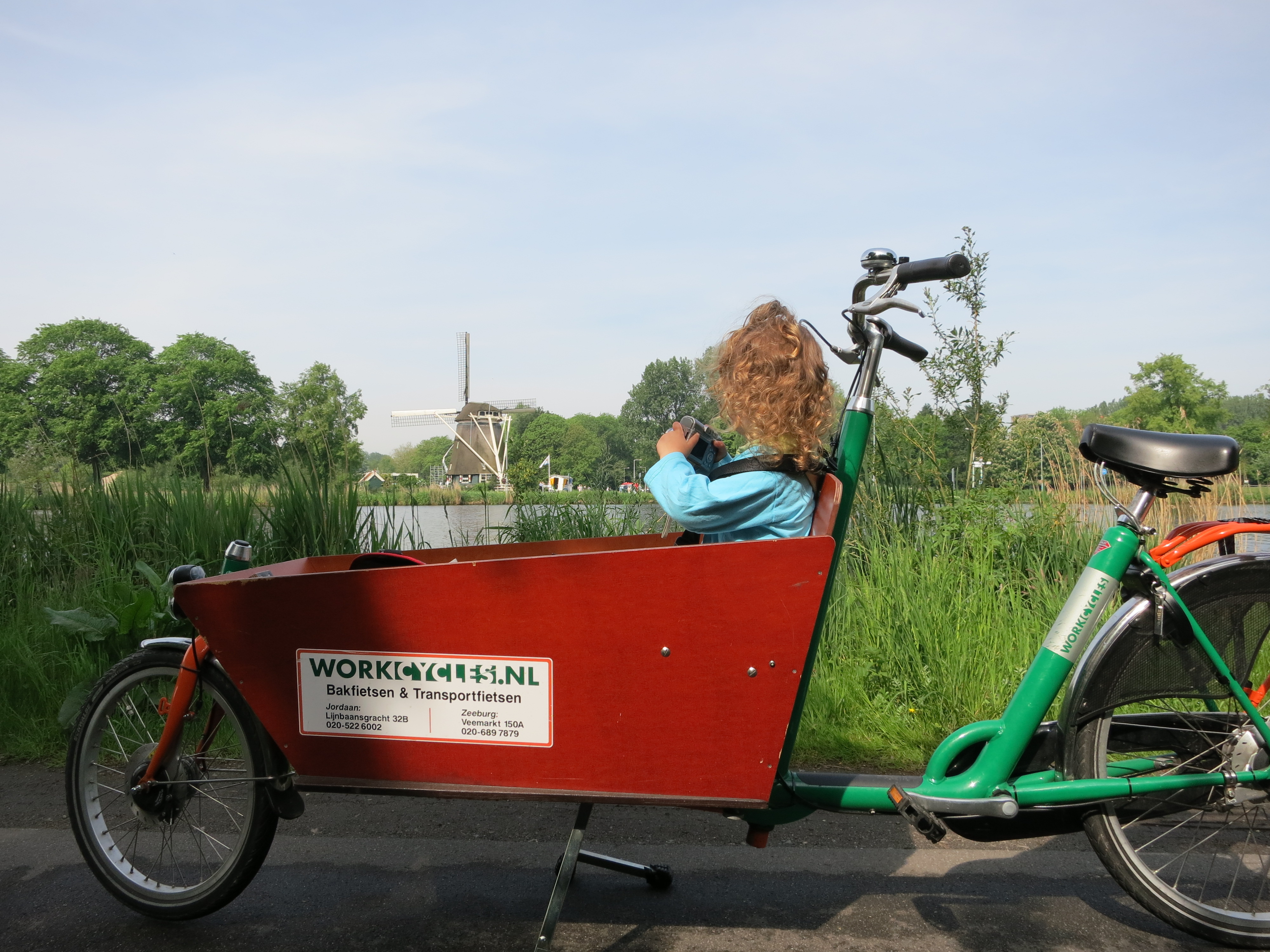
We stopped to admire this windmill during our trip along the Vecht. When I searched the camera to see if my daughter had been able to take a picture of it, I didn’t find anything. Chances are she missed pressing the button or maybe it was too difficult to press down with those little fingers. In looking at this picture, I can’t help but wonder how many more pictures she thought she was taking but didn’t and what sparked her interest enough to motivate her to point and shoot, so to speak.
BikeNYC.org
I’m “curating” over at Transportation Alternatives’s BikeNYC.org today, which means I get to pick an event to feature and offer some helpful and fun tips throughout the day. Please check out the deals page for some fun offers for people who ride, including free candy. Seriously…free candy.
My featured event is the Brooklyn Biketrain, which leaves every Thursday morning from Red Lantern Bicycles on Myrtle Avenue and heads to Manhattan via the Manhattan Bridge. It’s run by a great group of people and joining a biketrain is a fun, safe way to start your day.
“Good design breeds good behavior.”
Via Copenhagenize:
If I was a walking/cycling New York taxpayer, I’d be rather pissed that the city was chucking money into campaigns like these. One FAIL campaign is one thing, but this is just a continuation of a theme. The haiku posters of last year were in the same vein. Cars will hurt you. Stay out of their way, moron. The Don’t Be a Jerk campaign went even more directly after the people who do least damage and most good to any city, instead of employing rationality and going for the motorist jugular. Like I say all over the world in my Bicycle Culture by Design talk, if your cyclists behave badly, you have crappy infrastructure. Period. Fix it, and fix the behaviour problem. Good design breeds good behaviour.
 Brooklyn Spoke