Jim Walden: “Protecting people from the power of government” and bicycles
 Guess who was recognized as a lawyer who “leads by example” by the New York Law Journal on September 19th? Jim Walden, of course, channeling Howard Beale.
Walden offered this quote, without apparent irony:
It is difficult to right a wrong inflicted by the government, said Mr. Walden.
“Before I take a case I evaluate whether the client will get vindication without intense negotiation or litigation,” he said.
The Law Journal notes his pro bono work, some of which is quite admirable:
- “He filed a class action against the Social Security Administration, alleging a systematic failure to fairly adjudicate disability claims.”
- “He challenged the federal government’s practice of deporting aliens after two unrelated drug possessions.”
- “He sued the government to restore food stamp benefits to more than 11,000 disabled New Yorkers”
- “[He] represented a transgendered man suing a state-funded drug treatment center.”
Disabled people, wrongly deported immigrants, the transgendered…and people who don’t like a bike lane. Hmm…
The piece says that “Mr. Walden so far this year has devoted at least 800 hours to pro bono.” I wonder how many of them were for Iris Weinshall.
The New Putnam Triangle
On Sunday 9/25 I happened upon the Putnam Triangle block party to celebrate the new plaza they built there. I immediately knew this was on one of those Clinton Hill/Bed-Stuy “moments” where it’s like the 70s again, so I ran home and grabbed my camera. Heartwarming may be a cliche adjective, but it fits perfectly here. Things are not always perfect or easy, so it’s wonderful to see many familiar old school Putnam Street folks keeping the dance going. Whether or not they recognize me from my Downing Street days, it was so sweet to see some of the little kids I remember from diapers, now hula hooping with the older kids. There’s a spirit present in this neighborhood that is unique to the rest of the city. Peace planet Brooklyn, Rich Medina, and this Putnam triangle plaza thing. I dig!
Appeal to Unreason
I could write a million words about NBBL’s attempt to appeal the dismissal of their lawsuit, but my interpretation of why this small group is hoping to retry a case they have no shot in hell of winning is this:
No lawsuit, no media coverage.
We’ll see how this theory plays out this week and beyond.
Just when you thought it was safe to go back in the bike lane…
By the time this thing is over we’ll all be living in the floating city of New Chicago and President Chelsea Clinton will be negotiating a peace treaty with our robot overlords.
In case anyone is still interested in believing that Iris Weinshall & company are “for Better Bike Lanes,” it’s worth repeating the quote of the man who’s representing them, Jim Walden:
“For most big cities, bikes are not a practical way for people to move.”
Defenders Arch

Via a reader comes this image of Grand Army Plaza on a 1909 postcard. As the latest redesign nears completion, it’s really fun to look back and see how much has changed and how much as remained the same. The building in the lower left is located on the current site of the Prospect Park Residence. I love the relationship between the four columns at the entrance to Prospect Park and the arch, and as the kind of person who feels like a little kid every time he rides the cable cars in San Francisco, I’d love to see streetcars return to Brooklyn.
21st Century Transportation
This is cool. Century 21’s new Upper West Side location is offering customers free pedicab rides around the neighborhood. Money quote:
Pedicabs are ubiquitous around the entrances to Central Park and can be seen frequently chauffeuring passengers in midtown. On short trips they often can transport people as quickly as taxis in gridlocked traffic.
I’d love to see something like this happen in Brooklyn. Just don’t tell Jim Walden.
Changes at Pier 6
My wife and I biked down to Brooklyn Bridge Park yesterday to enjoy the great weather and take our daughter for a few spins on Jane’s Carousel. We typically access the park via the bike path along Columbia Street, which meets up with the end of Atlantic Avenue. DOT has recently made some changes to this pavement-heavy area and they look great.
Here’s the view looking toward Pier 6 and the water:
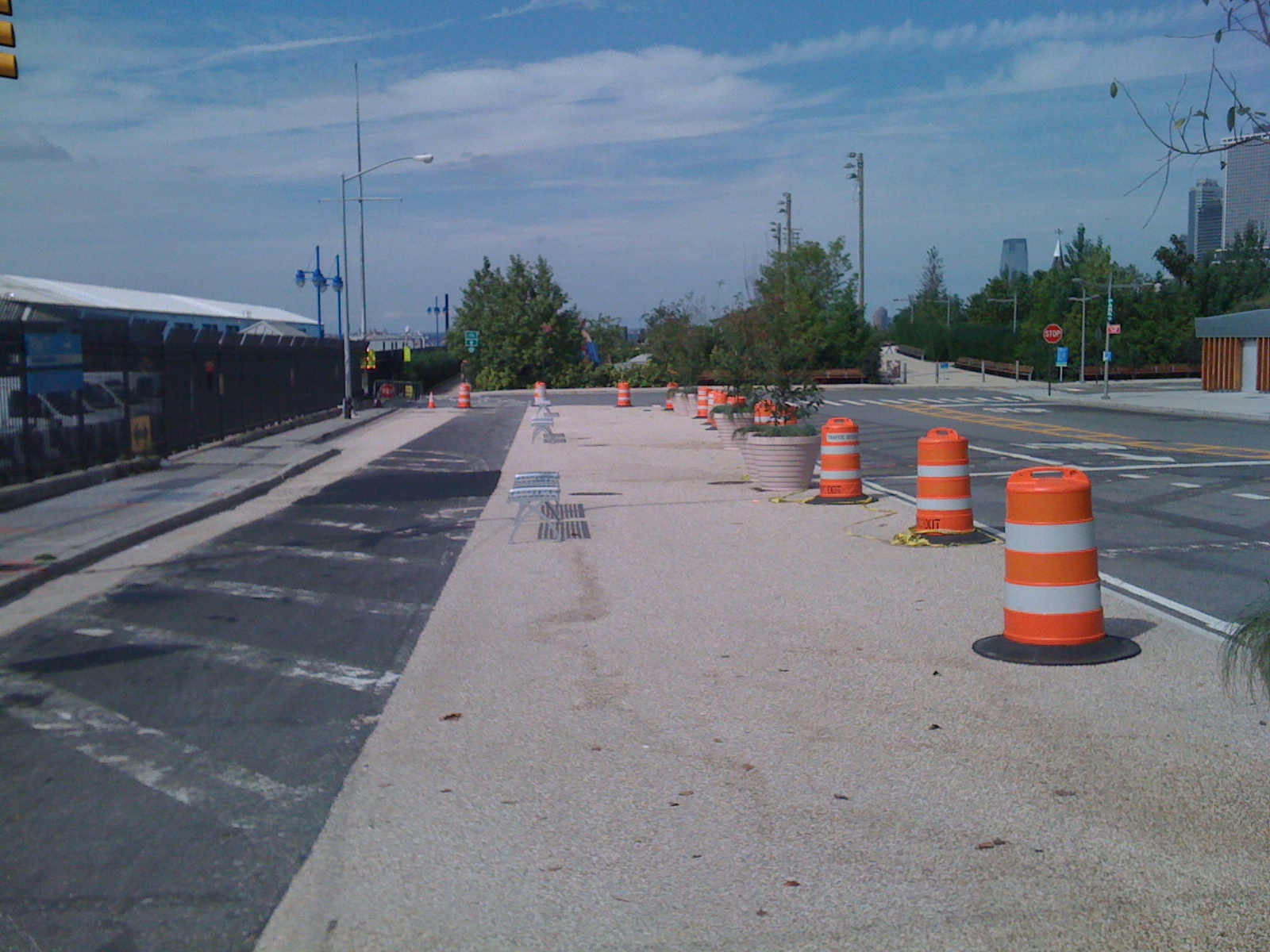
A few planters and benches have been installed making this area much more inviting and safer. The unfinished section on the left will be a two-way bike lane, which will allow pedestrians exclusive use of the sidewalk against the fence, and, of course the gravel-coated plaza.
Here’s how it used to look:
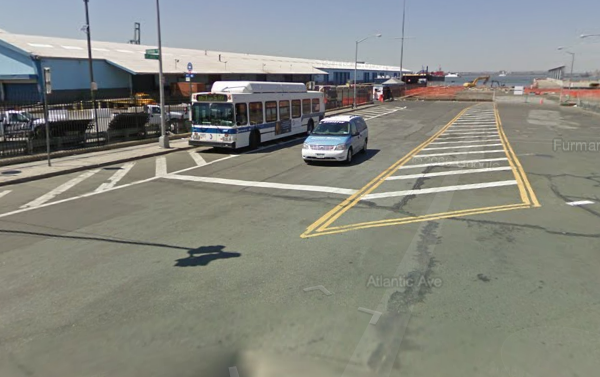
The image is a tad old – you can see in the background that none of the park has been finished, but the area in the foreground is more or less the same as how this area looked until just recently.
Here’s the view looking up Atlantic Avenue toward the BQE, with the tan gravel serving as a better divider between pedestrian and automobile space:
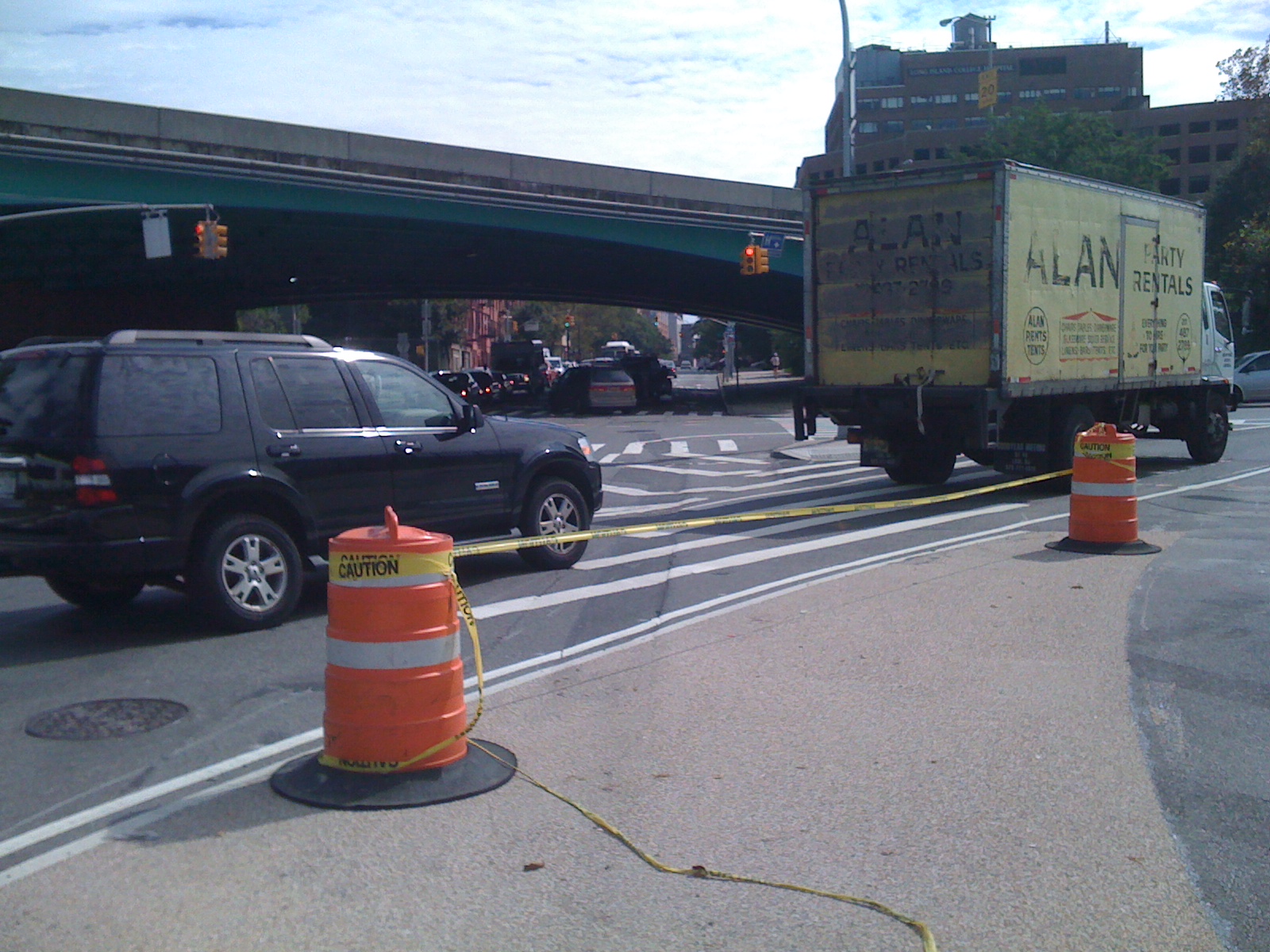
Eventually more improvements will come, making this important access point safer for all who enjoy Brooklyn Bridge Park.
You’re Either With Us or You’re With the Motorists
As the New York City bikelash recedes into memory, give or take a hiccup or two, the members of Neighbors for Better Bike Lanes have had a tough time convincing even the most controversy-driven newspapers to mimeograph their press releases and turn them into stories. Now that scaring New Yorkers about the bike menace is the sole province of unhinged New York Post columnists and the creative-class types at the Daily News, perhaps Louise Hainline would have more success offering her consulting services to Toronto Mayor Rob Ford. Maybe Norman Steisel could be talked into opening up a London office, Neighbours for Better Bike Lanes.
In the meantime, Jim Walden has these words of wisdom for Chicagoans about Mayor Rahm Emanuel’s push to make their town the most bike-friendly city in the United States:
“Bike lanes are a wonderful idea and people certainly enjoy them, but right now what people need are jobs and ways to make their lives easier,” said New York attorney Jim Walden, who represents plaintiffs in a suit against the Park Slope bike path, which was dismissed by a state judge. “For most big cities, bikes are not a practical way for people to move.”
Like most of Walden’s best quotes, one thought does not lead to another. Other than the fact that bike lanes make it possible for people to save a ton of money on car insurance, maintenance, gasoline, or public transit, and allow them to pour that money back into local businesses, bike lanes have absolutely nothing to do with the economy. And as anyone who’s ever endured big city traffic can tell you, cars are not a practical way for people to move. (At least not for other people.)
Can anything survive Walden’s logic? Millennium Park is a wonderful idea and people certainly enjoy it, but right now what people need is for it to be paved over and turned into a massive WPA program. If any Chicago readers think NBBL would have been okay with the Prospect Park West bike lane so long as it had been installed during an economic boon time, I have a mile of green paint I’d like to sell them in Brooklyn.
While reading another story called “The End of Motoring,” which is about generational shifts in England’s view of private car ownership, I was struck by a quote that seemed remarkably similar to Walden’s. It’s from Paul Waters, head of public affairs and roads policy for the UK’s Automobile Association:
“People driving less is good for the environment, but not good for the economy, and we’ve got to find a way to make the economy keep going.”
People driving less is generally not good for car and oil companies, but it can reap benefits for local communities and small-town businesses, but then again Waters, like Walden, has staked his career on standing up for the automobile. The similarity struck me so much, of course, that I was ultimately reminded of Upton Sinclair’s famous quote, “It is difficult to get a man to understand something, when his salary depends upon his not understanding it.”
Some of My Best Colleagues are Bike Lanes
“Methodologically we could spend the next six months refining and refining and refining,” he said. “All we said here is a number we hadn’t reported before. It’s nothing against bicycles.”
The damage from the hastily produced Hunter College Study is already done, but the Times’ Christine Haughney serves up this interesting follow-up to its findings. Her lede focuses a tad too much on intra-departmental sniping for my tastes, but the points raised by colleages of Peter Tuckel and William Milczarski are fair. Why did the study not seek to determine fault? Why did it not highlight the finding that injury rates have gone down since 2007 while cycling rates have gone up? Why was the study released before these and other questions could be answered? Saying that “we could spend the next six months refining and refining and refining” seems like a cop-out on Milczarski’s part.
More bluntly, if Transportation Alternatives initiated a study with shortcomings as obvious to the layperson as they are to the academic, such a study would be dismissed out of hand by all but a small cadre of Critical Mass participants. But because this study conveniently follows the Hulk-like narrative favored by the tabloids — “Bikes baaaaadddd!” — it’s embraced as evidence of the “bike menace” and spun beyond any hope of rational discussion. Haughney’s piece, as welcome as it is, will largely go unnoticed and, as a result of what these professors chose not to address before they released their study, a rare opportunity over how to make streets safer for pedestrians and cyclists has unfortunately been lost.
“The idea of waiting for something makes it more exciting”
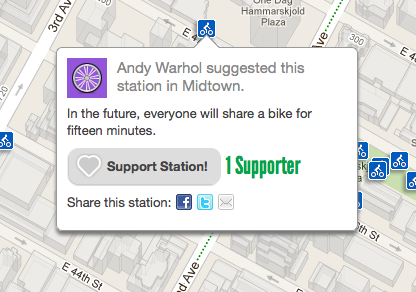
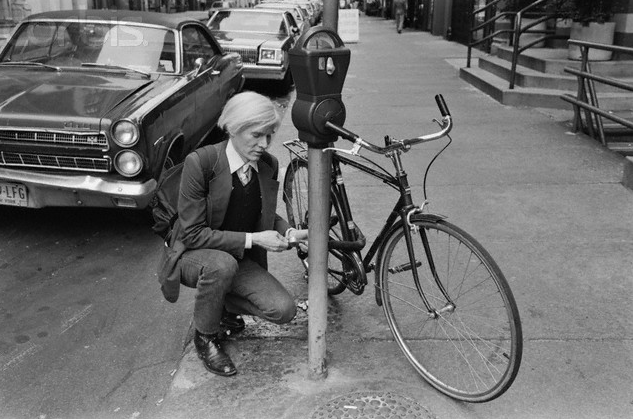
Here’s my contribution to the New York City Bike Share suggestion map, at the original location of The Factory. Maybe Andy himself would have been a big bike share user; had it existed when he was alive it would have made getting from 47th and 3rd to Studio 54 fairly easy.
 Brooklyn Spoke